
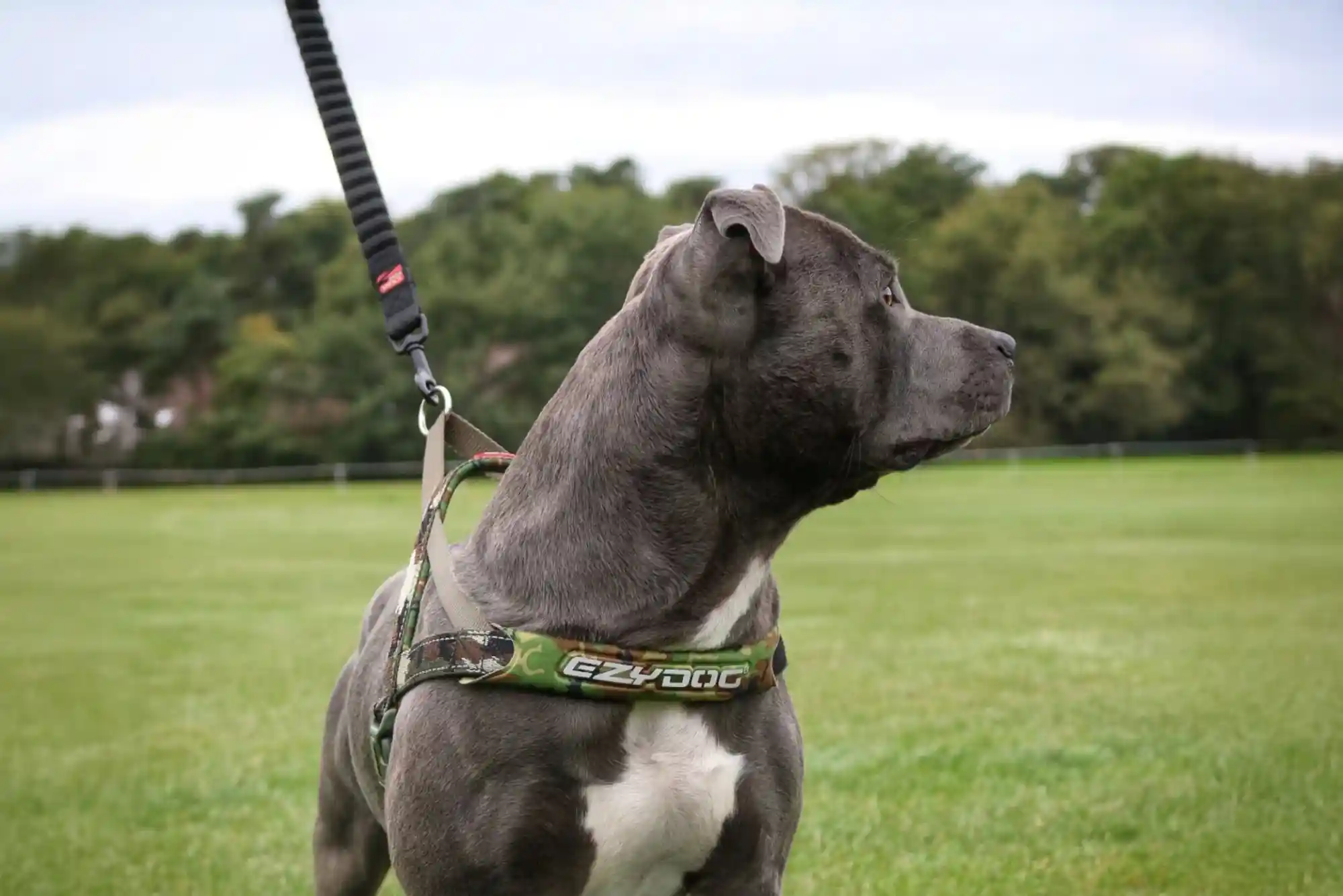
Introduction
Walking a powerful dog can be challenging when every squirrel, scent, passing dog, or interesting sound turns into a full-body pulling contest. Pitbulls, Boxers, and other strong pullers can generate impressive force, making a flimsy harness uncomfortable, unreliable, or simply unable to stand up to everyday use. That is why choosing the best heavy duty no-pull harnesses for Pitbulls, Boxers, and strong pullers is about much more than buying the toughest-looking product.
A good harness should provide dependable control without unnecessarily restricting movement. It should distribute pressure across the dog’s body, resist wear, stay securely fitted, and give you a practical way to redirect your dog when excitement takes over. Just as importantly, the harness should work alongside positive leash training rather than being treated as a replacement for it.
For owners researching durable walking equipment, understanding harness construction, attachment points, fit, comfort, and training compatibility will make it much easier to choose equipment that works for both dog and handler.
Why Strong Dogs Need a Heavy Duty No-Pull Harness
Large, muscular dogs put considerably more stress on walking equipment than calm dogs that stroll beside their owners. A harness that works perfectly for a small companion may stretch, shift, rub, or fail when used by a determined Pitbull or Boxer.
The best heavy duty no-pull harnesses for Pitbulls, Boxers, and strong pullers combine durable construction with a design that gives the handler greater control. Reinforced stitching, strong buckles, adjustable straps, secure leash attachment points, and abrasion-resistant materials are all useful characteristics.
However, “heavy duty” should never mean excessively stiff or uncomfortable. A harness can be extremely strong while still allowing the dog to walk, trot, turn, sit, and explore naturally.

A front attachment point can also be particularly useful for dogs that pull. When the leash is attached near the chest, forward pressure can help redirect the dog’s body toward the handler instead of allowing the dog to put its full strength directly into forward motion. Front-clip harnesses are commonly recommended as one part of a broader loose-leash training approach.
What Makes the Best Heavy Duty No-Pull Harnesses Different?
Not every no-pull harness is suitable for a strong dog. Before choosing one, consider how the harness is built and how your dog behaves on walks.
Strong Materials and Reinforced Construction
Durability begins with the materials. Look for dense webbing, reinforced seams, quality buckles, and sturdy leash rings. Metal hardware can provide additional confidence for powerful dogs, although overall construction matters more than any single component.
Pay particular attention to the stitching around the leash attachment points. This area experiences repeated stress every time your dog pulls, changes direction, or suddenly reacts to something.
Multiple Adjustment Points
Strong dogs come in very different shapes. A muscular Pitbull may have a broad chest, while a Boxer can have a deeper, more athletic body shape.
Multiple adjustment points allow you to create a secure fit around the chest and torso. The harness should remain stable rather than sliding sideways when the dog changes direction.
Front and Back Attachment Options
A dual-clip design can make a harness more versatile. The front clip can be useful during leash-training sessions, while the back clip may be convenient for relaxed walks once your dog has developed better leash manners.
Having both options also gives owners greater flexibility as their dog’s walking skills improve.
Secure Buckles and Hardware
A powerful dog can put considerable force on buckles and connection points. Choose equipment from a reputable manufacturer with carefully finished hardware and dependable construction.
Before every walk, quickly inspect the buckles, stitching, straps, and leash ring. Even excellent equipment eventually wears out.
Best Heavy Duty No-Pull Harnesses for Pitbulls
Pitbulls are often compact, muscular, and surprisingly powerful for their size. Their combination of strength and enthusiasm makes harness stability particularly important.
The best heavy duty no-pull harnesses for Pitbulls should fit securely around the chest without digging into the armpits. A front chest attachment can provide useful redirection when the dog tries to surge ahead.
Avoid selecting a harness based only on weight recommendations. Chest girth is usually a much more useful starting point because two dogs with the same weight can have dramatically different body shapes.
A secure fit is especially important if your Pitbull becomes excited outdoors. A poorly adjusted harness can shift or potentially allow a determined dog to back out. No harness should be considered completely escape-proof, so owners should always supervise their dogs and check the fit regularly.
Best Heavy Duty No-Pull Harnesses for Boxers
Boxers are energetic, athletic dogs that often combine strength with enthusiasm. They may pull toward people, dogs, scents, or anything else that captures their attention.
The best heavy duty no-pull harnesses for Boxers should provide enough coverage for stability without interfering with shoulder movement.
Look for a design that sits comfortably around the chest and leaves the front legs free. Watch your dog walk in the harness before committing to it. If the straps repeatedly rub behind the front legs or the harness rotates significantly from side to side, try a different size or design.
Boxers can also benefit from a harness that gives the handler more than one leash attachment option. This allows the equipment to adapt as leash manners improve.
Best Heavy Duty No-Pull Harnesses for Strong Pullers
Some dogs are simply stronger pullers than their size suggests. A 25-pound dog with intense forward drive can sometimes be harder to manage than a much larger dog that walks calmly.
For these dogs, the best heavy duty no-pull harnesses for Pitbulls, Boxers, and strong pullers should offer a combination of mechanical control, secure fit, and comfort.
A front-clip attachment can help reduce the advantage a dog gets from leaning forward into the leash. However, it should not be viewed as a magic solution. A harness manages the situation; training teaches the dog what behavior you actually want.
Rewarding loose-leash walking is an important part of the process. Professional training guidance commonly recommends working in low-distraction environments first, rewarding the dog for staying near you, and gradually increasing the difficulty.
How to Choose the Right Harness Size
Even the strongest harness can fail to perform properly if it does not fit correctly.
Start by measuring your dog’s chest according to the manufacturer’s instructions. Do not assume that a large dog automatically needs a large harness. Breed labels are useful for general guidance, but individual body shape should determine the final size.
Check the Chest and Straps
The harness should feel secure without being painfully tight. You should not see the harness sliding dramatically from one side to another when your dog walks.
Pay close attention to the area behind the front legs. Excessive rubbing can lead to irritation, hair loss, or discomfort.
Watch Your Dog Move
Ask your dog to walk, turn, sit, and change direction while wearing the harness. Observe whether the shoulders can move naturally.
A well-designed harness should provide control without unnecessarily interfering with normal movement. Fit guides commonly recommend a snug fit that does not pinch or restrict the dog’s movement.
Recheck the Fit Regularly
Dogs change shape. Puppies grow, adult dogs may gain or lose weight, and muscular dogs can change condition through exercise.
Check the adjustment periodically rather than assuming the original fitting will remain perfect forever.
No-Pull Harness vs. Regular Harness
The biggest difference is usually the leash attachment and how the harness influences pulling.
A conventional back-clip harness can be comfortable and useful for dogs that already walk politely. However, it may give a determined puller a better mechanical position for moving forward.
A front-clip no-pull design can provide more redirection when the dog pulls. This does not mean every dog needs a front clip permanently. Once leash manners improve, some owners may prefer a back attachment for everyday walking.
The ideal choice depends on the individual dog, handler, training goals, and walking environment.
How to Stop a Pitbull or Boxer From Pulling
Equipment alone rarely solves persistent leash pulling. If the dog discovers that pulling gets them closer to the park, another dog, a scent, or an interesting object, the behavior can become self-rewarding.
Start somewhere quiet. Reward your dog whenever the leash remains loose and your dog chooses to stay near you. When pulling begins, stop or change direction rather than allowing the dog to drag you toward the distraction.
As your dog improves, gradually introduce more challenging environments.
For additional guidance on preventing pulling, owners can also explore Whole Dog Journal Pulling Prevention and incorporate consistent loose-leash exercises into everyday walks.
The goal is not simply to make pulling physically difficult. The goal is to teach your dog that walking calmly beside you is the behavior that makes good things happen.
Comfort Matters as Much as Strength
A harness can be incredibly durable and still be a poor choice if your dog dislikes wearing it.
Dogs that associate a harness with discomfort may resist putting it on or become frustrated during walks. Look for padding where appropriate, smooth edges, breathable materials, and a shape that works with your dog’s body.
Nutrition and overall wellbeing can also influence how your dog approaches exercise. Providing a balanced diet appropriate for your dog’s life stage and activity level is an important part of responsible ownership. Owners interested in learning more can explore Premium Organic Pet Nutrition for additional pet-care information.
How to Make a Heavy Duty Harness Last Longer
Even premium equipment benefits from regular care. After muddy or wet walks, clean the harness according to the manufacturer’s instructions and allow it to dry completely before storing it.
Avoid using damaged equipment simply because it “looks like it still works.” Frayed webbing, weakened stitching, cracked buckles, or a bent leash ring are reasons to replace a harness.
It is also wise to inspect the harness before every walk, particularly when walking a dog that can generate substantial pulling force.
If you’re looking for more general pet-care information, training resources, and animal-focused content, you can also visit Uaetycoon.
Are Heavy Duty No-Pull Harnesses Safe?
A properly fitted harness can be a useful walking tool, but no design should be considered automatically safe simply because it is marketed as “no-pull.”
The harness should not cause persistent rubbing, restrict natural movement, or create obvious discomfort. Introduce a new harness gradually and observe your dog carefully.
If your dog has severe leash reactivity, repeated lunging, or unpredictable behavior around people and animals, consider working with a qualified positive-reinforcement trainer. Equipment can improve physical management, but behavior modification may be necessary for the underlying problem.
Common Mistakes When Buying a Heavy Duty Harness
One common mistake is choosing the strongest-looking harness without considering fit. Strength matters, but an uncomfortable harness will not produce better walks.
Another mistake is assuming a no-pull harness eliminates the need for training. It does not. The best results come when equipment and training work together.
Some owners also buy based solely on breed. While breed-specific recommendations can provide a starting point, chest size, body structure, temperament, and individual behavior are more important than the breed label printed on the packaging.
Finally, never overlook the leash. A strong harness connected to a weak or worn leash still creates a potential failure point.
Choosing the Right Harness for a Strong Puller
Finding the best heavy duty no-pull harnesses for Pitbulls, Boxers, and strong pullers is ultimately about balancing strength, control, comfort, and fit. A durable harness gives you dependable equipment, while a front attachment can make managing pulling easier. But the most effective long-term solution combines good equipment with calm, consistent leash training.
Before buying, measure your dog’s chest, consider their body shape and behavior, inspect the harness construction, and make sure the design allows comfortable movement. Once you find the right fit, use it as part of a positive training routine rather than expecting the harness to solve pulling by itself.
FAQs
What is the best harness for a dog that pulls hard?
For a powerful puller, look for a durable, properly fitted harness with a front leash attachment, multiple adjustment points, and reinforced construction. The harness should be combined with consistent loose-leash training rather than used as the only solution.
Are no-pull harnesses good for Pitbulls?
Yes, a properly fitted no-pull harness can be useful for Pitbulls, particularly those that pull strongly. A front-clip design can give the handler additional control while training. The right size and fit are essential.
Are no-pull harnesses safe for dogs?
A properly fitted no-pull harness can be safe for walking when it does not rub, pinch, or restrict normal movement. Owners should inspect the fit and observe the dog’s gait regularly.
How do I stop my Pitbull from pulling on the leash?
Use a suitable harness and teach loose-leash walking through rewards and consistency. When your dog pulls, stop moving or redirect attention rather than allowing pulling to take them toward whatever they want. Reward slack in the leash and gradually practice around more distractions.
Can a dog escape from a no-pull harness?
Yes. Dogs can sometimes back out of poorly fitted harnesses, especially if the design does not suit their body shape. Dogs that are known escape artists may benefit from a more secure design, but no harness should be treated as completely escape-proof.
Should my dog wear a harness all day?
Generally, a walking harness is intended for walks and supervised activities rather than continuous wear. Removing it when your dog is resting can help prevent rubbing, irritation, chewing, or accidental snagging.
Related Reading: How to Train a Dog to Walk Beside a Stroller Without Pulling or Lunging — full guide
Related Reading: طب الأسنان: أفضل الممارسات — full guide
Related Reading: المسح الأرضي: أفضل الممارسات — full guide
Related Reading: كل ما تحتاج معرفته عن تخصص التغذية وصحة جسمك