Introduction
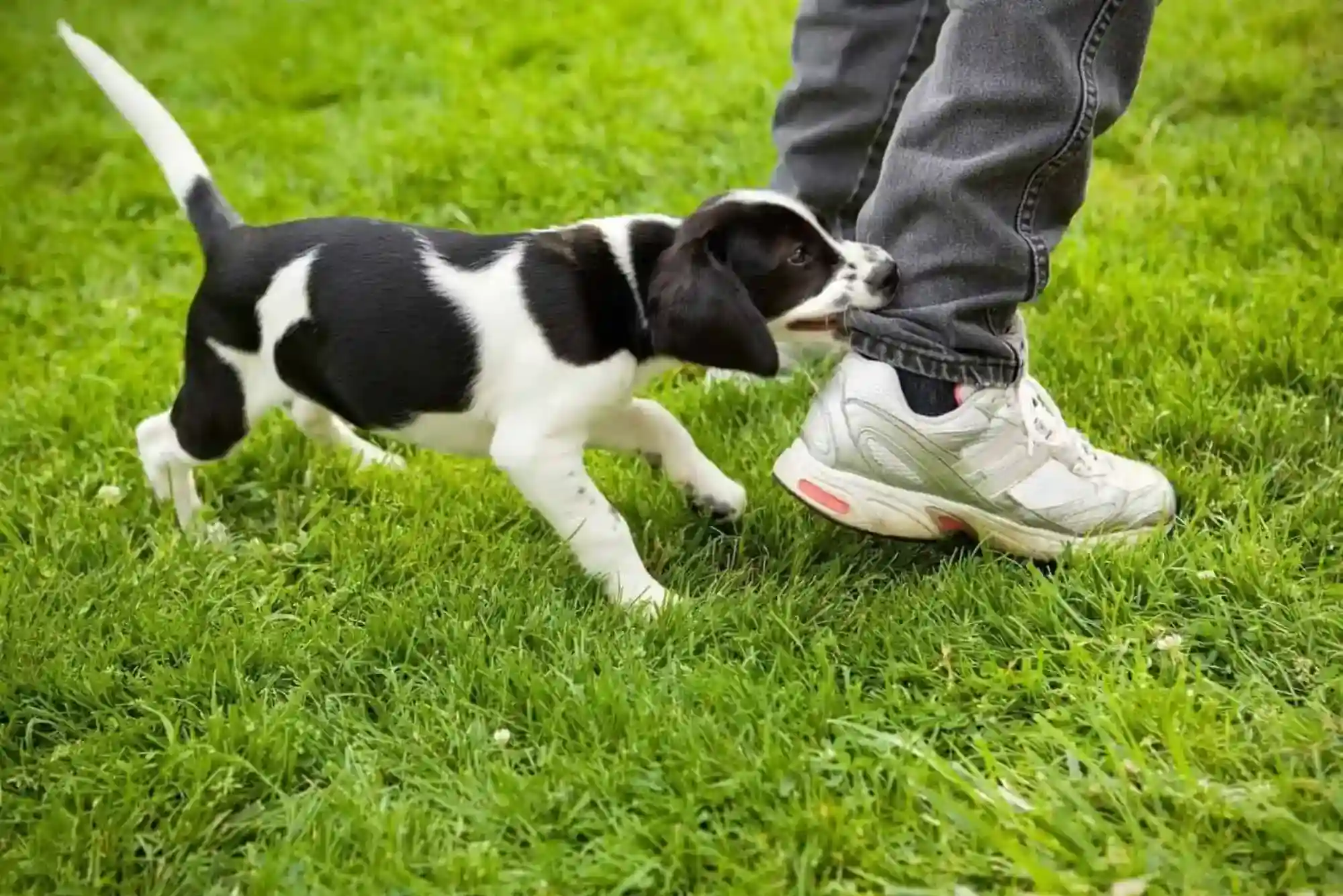
Puppy walks should be enjoyable, but ankle biting and pant-leg grabbing can quickly become frustrating. Many puppies chase moving feet, nip at trousers, or tug on clothing whenever their owners start walking. Although this behavior can seem aggressive, it is often linked to playfulness, excitement, teething, or overstimulation. Learning how to stop a puppy from biting ankles and pant legs during walks helps create safer, calmer walking habits. With consistent training, appropriate toys, and positive reinforcement, you can teach your puppy to walk politely without turning every outing into a struggle.
Why Do Puppies Bite Ankles and Pant Legs During Walks?
Understanding the reason behind this behavior is the first step toward correcting it. Puppies explore their surroundings with their mouths, and moving feet can trigger their natural chasing instincts. Loose trousers also resemble tempting toys when they swing during movement.
Teething can make puppies more interested in chewing clothing. Additionally, puppies sometimes bite when they become tired, frustrated, or overwhelmed by unfamiliar sights and sounds. Some learn that grabbing a pant leg makes their owner stop, talk, or interact with them.
Recognizing the trigger helps you choose the right training approach. A playful puppy may need redirection, while an overtired puppy may need a quiet break.
How to Stop a Puppy from Biting Ankles and Pant Legs During Walks
Stop Moving When Your Puppy Starts Biting
When your puppy grabs your ankle or trousers, stop walking immediately. Keep your body calm and avoid pulling your leg away quickly. Sudden movement can make the clothing more exciting and encourage your puppy to chase harder.
Wait for your puppy to release the fabric. Then redirect attention toward a suitable toy or reward calm behavior. Resume walking when your puppy is settled.

Consistency matters because every family member should respond similarly. If biting sometimes leads to an exciting game, your puppy may continue testing the behavior.
Redirect Biting Toward Appropriate Toys
Puppies need appropriate outlets for chewing and tugging. Carry a small, puppy-safe tug toy or another suitable chew toy during walks. When your puppy starts targeting your ankles, calmly offer the toy instead.
Praise your puppy when they bite the toy rather than your clothing. This teaches an important lesson: chewing is acceptable, but human skin and trousers are not appropriate targets.
Choose toys that are durable, correctly sized, and suitable for your puppy’s age. Supervise play and replace damaged toys to reduce swallowing or choking risks.
Reward Calm Walking Behavior
Positive reinforcement helps puppies understand which behaviors earn rewards. Carry small treats during training and reward your puppy for walking beside you without grabbing clothing.
Start by rewarding just a few calm steps. Gradually increase the distance as your puppy becomes more successful. You can also reward eye contact, responding to their name, and walking on a loose lead.
Keep rewards frequent enough to make the desired behavior worthwhile. Short, successful sessions are generally more effective than long walks filled with repeated corrections.
Teach Your Puppy to Focus on You
Teaching a simple attention cue can help prevent ankle biting before it begins. Choose a cue such as “look” or your puppy’s name. Say it once, then reward your puppy when they turn toward you.
Practice indoors before using the cue outside. Once your puppy responds reliably, introduce the exercise in a quiet outdoor area with few distractions.
Use the cue when you notice early signs of excitement, such as staring at your feet, crouching, or repeatedly jumping toward your trousers. Reward your puppy for turning away from your clothing and reconnecting with you.
Keep Walks Short and Manageable
Young puppies can become overstimulated quickly. Long walks, busy pavements, unfamiliar dogs, and excessive noise may leave them too excited to respond to training.
Choose short outings suited to your puppy’s age, health, and vaccination guidance from your veterinarian. Allow plenty of time for sniffing and exploring safely.
If biting increases as the walk continues, consider whether your puppy needs rest rather than more exercise. A quiet break can be more helpful than repeatedly asking an exhausted puppy to behave.
What Should You Do When Your Puppy Grabs Your Trousers?
When a puppy grabs clothing, avoid shouting, kicking, or forcefully pushing them away. These reactions can frighten your puppy or make the interaction more exciting.
Instead, remain calm and minimize movement. Offer a toy when it is safe to do so, then reward your puppy for releasing the fabric and engaging appropriately.
If your puppy becomes increasingly excited, move to a safe, quiet area and allow them to settle. Avoid dragging them by the lead or pulling clothing from their mouth, as these actions may intensify the struggle.
If the behavior happens repeatedly, review the circumstances. Your puppy may need more rest, easier training sessions, or greater distance from distracting environments.
Common Mistakes That Make Puppy Biting Worse
One common mistake is turning ankle biting into a game. Running away, waving your feet, or pulling trousers free can encourage chasing.
Another mistake is using punishment. Hitting, yelling, or frightening a puppy may damage trust without teaching an appropriate alternative.
Inconsistent responses can also slow progress. If one person rewards calm walking while another plays tug with clothing, the puppy receives confusing signals.
Finally, expecting perfect behavior too early can create unnecessary frustration. Puppies need time to develop impulse control. Focus on gradual progress rather than expecting immediate results.
How to Prevent Ankle Biting Before It Starts
Prevention can make walks easier while your puppy develops better habits. Before leaving home, provide a brief opportunity for calm play and toileting. Bring treats and an appropriate toy so you can redirect attention early.
Watch your puppy’s body language and intervene before biting begins. If your puppy becomes fixated on moving feet, pause and ask for a simple, familiar behavior.
Choose quieter walking routes during the early stages of training. Avoid crowded areas until your puppy can handle distractions more comfortably.
Also, establish a predictable routine that includes sleep, enrichment, gentle play, and appropriate exercise. A well-rested puppy is often better prepared to learn.
When Should You Seek Professional Help?
Occasional playful nipping is common in puppies, but persistent or intense biting deserves attention. Seek help from a veterinarian if the behavior begins suddenly, appears linked to pain, or accompanies other concerning changes.
Consider working with a qualified, reward-based dog trainer if your puppy repeatedly bites hard, breaks skin, becomes difficult to interrupt, or shows signs of fear. A professional can assess the situation and develop a plan suited to your puppy.
Avoid trainers who rely on intimidation or harsh physical corrections. Humane, evidence-informed training methods support learning while protecting your relationship with your dog.
Frequently Asked Questions
Why does my puppy bite my ankles when I walk?
Puppies often chase ankles because moving feet trigger their play and chasing instincts. Teething, excitement, frustration, and tiredness can also contribute. Observe when the behavior occurs to identify the most effective solution.
How do I stop my puppy from biting my pant legs on walks?
Stop moving calmly when your puppy grabs your trousers. Redirect their attention toward a suitable toy and reward them when they release the fabric. Practice rewarding calm walking regularly to build better habits.
Should I ignore my puppy when they bite my feet?
Briefly removing attention can help when biting is playful and attention-seeking. However, ignoring alone may not work for every puppy. Stop moving, redirect toward an appropriate toy, and reward calm behavior. Avoid leaving a puppy distressed or allowing unsafe biting to continue.
Does puppy ankle biting mean aggression?
Not necessarily. Most puppy ankle biting is related to play, excitement, exploration, or overstimulation. However, stiff body posture, repeated hard bites, intense fear, or escalating behavior may require professional assessment.
Will my puppy eventually stop biting my ankles?
Many puppies improve as they mature and develop better impulse control. However, improvement is more reliable when owners consistently reward appropriate behavior and prevent repeated rehearsal of ankle biting. Some puppies need additional training to overcome the habit.
How long does it take to stop puppy biting during walks?
Progress depends on your puppy’s age, temperament, environment, and training consistency. Some puppies improve within days, while others need several weeks or longer. Focus on gradual improvement and seek professional guidance if the behavior persists or worsens.
Conclusion
Learning how to stop a puppy from biting ankles and pant legs during walks requires patience, consistency, and a clear training strategy. By understanding your puppy’s triggers, stopping movement calmly, redirecting biting toward toys, and rewarding polite walking, you can gradually replace unwanted behavior with better habits.